Quartz vs Granite vs Porcelain Slab vs Quartzite: Which Countertop Is Right for Your Kitchen
A San Fernando Valley Contractor’s Honest Guide
Nobel Builders | nobelbuilders.com | (818) 650-2052
If you’re planning a kitchen or bathroom remodel in the San Fernando Valley, your countertop choice is one of the biggest decisions you’ll make. It sets the tone for the entire space, it’s the surface you’ll touch every single day, and it’s usually one of the largest line items in the budget.
After years of installing countertops across Tarzana, Encino, Sherman Oaks, Studio City, Woodland Hills, and the surrounding areas, I’ve seen what holds up, what doesn’t, and what homeowners actually end up loving five years down the road.
This guide breaks down the four materials I get asked about the most: quartz, granite, porcelain slab, and quartzite. I’ll cover the pros, cons, real pricing, and give you my honest recommendation at the end.
| Quartz | Granite | Porcelain Slab | Quartzite | |
| Price/SF Installed | $70–$150 | $50–$200 | $50–$120 | $65–$150+ |
| Material Type | Engineered | Natural Stone | Engineered Ceramic | Natural Stone |
| Heat Resistant | No | Yes | Yes | Yes |
| Sealing Needed | No | Yes (annual) | No | Yes (annual) |
| Scratch Resistance | High | High | Very High | Very High |
| Stain Resistance | Excellent | Good (sealed) | Excellent | Good (sealed) |
| UV Resistant | No | Yes | Yes | Yes |
| Maintenance | Very Low | Moderate | Very Low | Moderate |
| Best For | Most kitchens | Traditional style | Modern / outdoor | Marble look + durability |
Quick Comparison at a GlancePricing reflects general market ranges and will vary based on slab selection, edge profiles, cutouts, and installation complexity. Contact us for a project-specific estimate.
Quartz: The All-Around Winner for Most Kitchens
Quartz countertops are engineered from roughly 90–93% ground natural quartz mixed with polymer resins and pigments. The result is a non-porous surface that doesn’t require sealing, resists stains, and comes in an enormous range of colors and patterns.
Why Homeowners Love It
Quartz requires virtually no maintenance — no sealing, no special cleaners, just soap and water. Because it’s non-porous, it won’t harbor bacteria and spills wipe right up. Since it’s engineered, you also get a consistent appearance: what you see in the showroom is exactly what gets installed, with no surprises. You’ll have a huge design range to choose from, including solid whites, realistic marble looks, and concrete finishes, and the material is extremely durable against scratches, chips, and daily wear.
What to Watch Out For
The biggest limitation of quartz is heat sensitivity — hot pots placed directly on the surface can cause discoloration or cracking, so always use a trivet. Direct sunlight can also cause fading over time, making quartz less ideal for outdoor kitchens or counters next to large unshaded windows. On large layouts, seams can be visible, particularly with veined patterns, so placement matters. And if you’re looking at budget options, be aware that some lower-grade “builder grade” quartz uses more resin, which can give it a less natural look.
Typical Cost
As a general ballpark, quartz typically starts around $85 per square foot installed, though pricing varies based on brand, slab selection, and project complexity. Premium brands like Cambria and Caesarstone tend to run higher, while brands like MSI or Silestone offer solid mid-range options. Contact us for a project-specific estimate.
Granite: The Classic Natural Stone
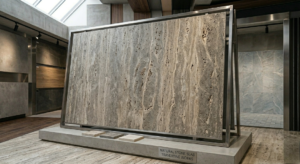
Granite was the countertop king for decades, and it still has a place. Each slab is one of a kind, mined from quarries around the world. It’s heat resistant, reasonably hard, and brings natural character to a kitchen that engineered materials can’t fully replicate.
Why Homeowners Love It
Granite is heat resistant, so you can set a hot pan down without worry — something you can’t say about quartz. Every slab is one of a kind, with natural veining, speckling, and color variation that gives your kitchen real character. It’s also UV resistant, which makes it a solid choice near windows or for outdoor applications. Granite has been a go-to countertop material for over 30 years, and entry-level options make it one of the more accessible natural stones price-wise.
What to Watch Out For
The main thing to keep in mind with granite is that it’s porous and requires sealing every 1–2 years to prevent staining. It can also crack or chip, especially around sink cutouts or under impact. Since every slab is cut from a different section of stone, the one you see at the yard may look different from what gets installed — always view your actual slab before purchase. Fissures and pits are natural but can collect dirt if not sealed properly, and granite is heavier than quartz, which may require cabinet reinforcement in older homes.
Typical Cost
Granite pricing varies quite a bit depending on the stone — as a rough guide, entry-level options tend to be very approachable, while exotic selections (deep blues, greens, or heavily figured slabs) can run significantly higher. Pricing depends on slab availability, complexity, and current market conditions. Reach out for a free estimate tailored to your project.
Porcelain Slab: The New Contender
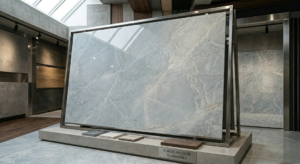
Porcelain slab countertops are one of the newer options gaining traction in the remodeling world. These are large-format slabs (not tiles) made from compressed clay fired at extremely high temperatures. The result is an ultra-hard, non-porous surface.
Why Homeowners Love It
Porcelain slab handles heat beautifully — you can place hot cookware directly on it without damage. It’s also completely non-porous, which means no sealing, ever, and it’s fully stain resistant. UV resistance makes it one of the best options for outdoor kitchens, a big factor here in the Valley. The slab is lightweight and thin (typically 12mm), giving it a sleek, modern profile. It can also convincingly mimic the look of marble, concrete, and other stone patterns, and it’s extremely scratch resistant.
What to Watch Out For
Porcelain slab requires a specialist installer — the thin slabs can crack during fabrication and handling if the person isn’t experienced with the material, so finding a qualified fabricator is critical. The thin profile also limits your edge options, mostly to square or mitered edges (a mitered edge does add cost). Color-wise, the pattern is surface-deep only, if it chips, the core may look different than the surface you selected.
Typical Cost
Porcelain slab is generally competitive with quartz on pricing, making it an attractive option for those who want a high-end look without the premium of natural stone. Final cost depends on slab thickness, brand, and project scope. Contact us for a ballpark based on your specific layout.
Quartzite: The Premium Natural Stone
Quartzite is a natural metamorphic stone formed when quartz-rich sandstone is exposed to extreme heat and pressure underground. It’s important not to confuse quartzite with quartz. They sound similar, but quartzite is 100% natural and quartz is engineered.
Quartzite is the material many homeowners choose when they want the look of marble without the maintenance headaches.
Why Homeowners Love It
Quartzite offers a gorgeous veining that captures the elegant look of marble, especially in white and gray tones, while being extremely hard — even harder than granite — making it very scratch resistant. It handles heat with ease, so hot pots and pans are not a problem, and its UV resistance makes it suitable for outdoor applications as well. Best of all, every slab is one-of-a-kind, giving your space a truly unique finish.
What to Watch Out For
From showroom to installation, and holds up beautifully to daily kitchen use without any sealing routine. Like granite, quartzite is porous and requires annual sealing to prevent staining. It also tends to be the most expensive option in this group, reflecting its rarity and natural appeal. Its dense slabs are heavy, which can affect cabinet requirements and installation logistics. Color options are more limited compared to engineered materials — most quartzite comes in shades of white, gray, and beige, with some exotic colors available at a premium. Finally, quality can vary significantly, as some stone sold as “quartzite” is actually marble or dolomite, so it’s important to buy from a reputable supplier and request a scratch or acid test before committing.
Typical Cost
Quartzite is generally the most premium-priced option in this group, reflecting its rarity and the craftsmanship required to fabricate it. Pricing varies significantly by slab, with more exotic varieties like Taj Mahal or Super White running considerably higher. Give us a call and we can give you a realistic range based on what’s currently available.
My Recommendation
For most kitchen and bathroom remodels here in the San Fernando Valley, I recommend quartz. Here’s why:
- It gives you the widest range of design options at a predictable price point.
- The near-zero maintenance is a real advantage for busy households.
- It’s consistent: what you pick in the showroom is what you get installed.
- It’s durable enough for daily kitchen use without the sealing routine of natural stone.
That said, the right choice depends on your priorities:
If you want the look of marble without the maintenance headaches, quartzite is a stunning choice — just budget accordingly. If you love the character of natural stone and don’t mind sealing it once a year, granite is a proven, beautiful option. For outdoor kitchens or spaces that need maximum heat resistance with a modern look, porcelain slab is hard to beat. And if you want the best all-around balance of looks, durability, low maintenance, and value, quartz is our top pick and personal favorite — it offers the widest range of design options at a predictable price point, requires virtually no maintenance, and delivers a consistent appearance from slab to slab.
The best way to decide is to visit a slab yard, see the materials in person, and talk through your specific kitchen layout with your contractor. Every project is different, and a material that works perfectly in one kitchen might not be the best fit for another.
Planning a kitchen or bathroom remodel?
Nobel Builders specializes in kitchen and bathroom remodeling across the San Fernando Valley. We’ll walk you through material options, help you pick the right countertop for your space, and handle the installation from start to finish.
Call us at (818) 650-2052 or visit nobelbuilders.com to get started.
Nobel Builders Serves:
Tarzana • Encino • Sherman Oaks • Studio City • Woodland Hills • West Hills • Northridge • Chatsworth • Calabasas • Topanga