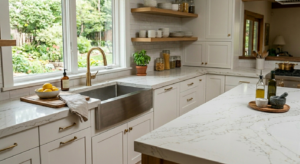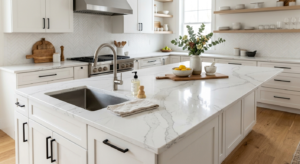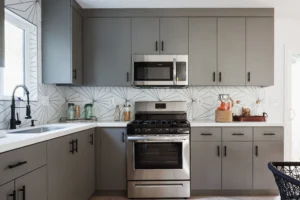
In the world of modern home design, a smaller footprint does not have to mean a compromise on luxury or utility. For many homeowners, the challenge of a compact kitchen is actually an invitation to innovate. At Nobel Builders, we have found that the most successful small kitchen transformations are those that prioritize architectural precision and custom solutions over standard, “off-the-shelf” layouts. By focusing on verticality, light, and high-end materials, even a modest galley kitchen can be transformed into a culinary powerhouse that rivals the functionality of a grand estate kitchen.
The Architectural Foundation of Small Kitchen Design
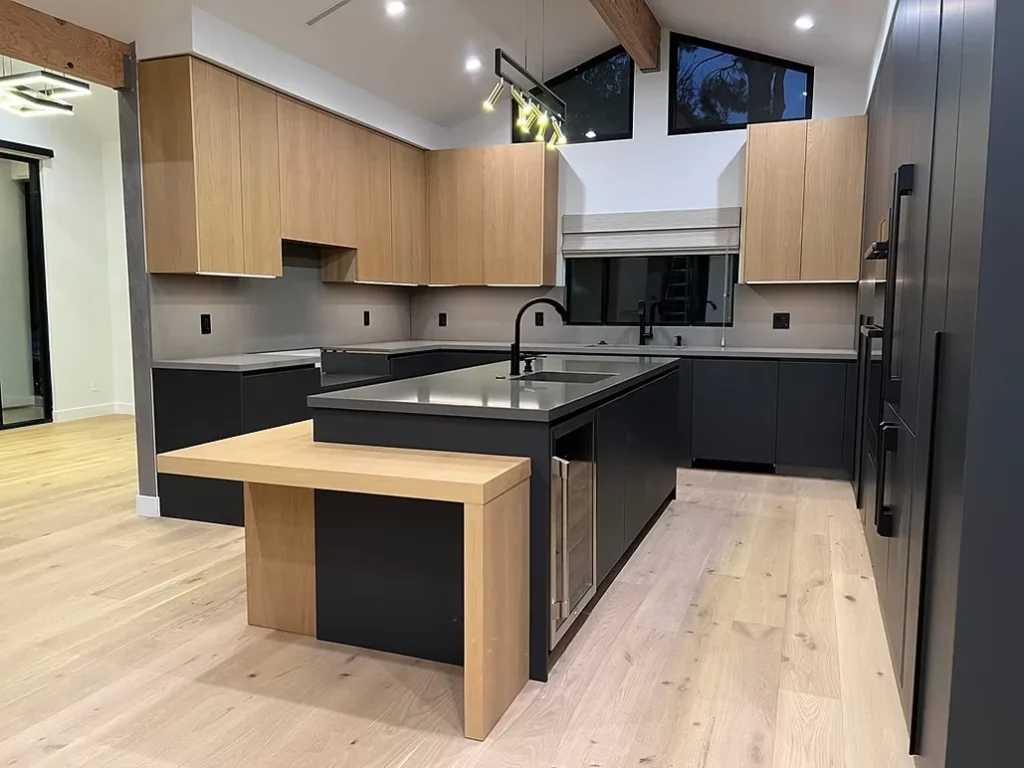
Effective small-space remodeling begins with a shift in perspective: you are not just working with square footage, but with cubic footage. Standard kitchen designs often leave the top third of a room unused, but in a compact space, this is prime real estate. Custom cabinetry that extends to the ceiling not only provides extra storage for seasonal items but also draws the eye upward, creating an optical illusion of a higher ceiling and a more expansive room.
When planning a layout, the goal is to minimize “friction” in the workspace. The traditional “Work Triangle”, the path between the sink, stove, and refrigerator, is particularly critical in small kitchens. However, modern design often favors “Zone-Based” planning. By clustering tasks, such as a dedicated coffee station or a prep zone with an integrated cutting board, you reduce the need to move across the room, making the kitchen feel more intuitive and less cramped.
Engineering Intelligent Storage Solutions
The secret to a clutter-free small kitchen lies behind the cabinet doors. In a limited space, every inch must be engineered for a specific purpose. This is where Nobel Builders excels, moving beyond basic shelving to implement high-performance storage hardware. Pull-out pantries, corner “Lazy Susans” with full-extension hardware, and toe-kick drawers (utilizing the space under the bottom cabinets) ensure that no corner is wasted.
Consider the depth of your cabinetry as well. While 24-inch depth is standard, opting for slightly shallower cabinets in certain runs can open up floor space without significantly sacrificing storage. Conversely, adding just three inches of depth to a countertop can provide enough room for a hidden appliance garage, keeping your stand mixers and toasters off the precious counter surface. For technical insights into cabinet safety and construction standards, homeowners can refer to the Kitchen Cabinet Manufacturers Association (KCMA), which sets the industry benchmark for durability and weight-bearing capacity.
The Role of Material Selection and Visual Continuity
In a small kitchen, the eyes perceive every detail. Using too many competing textures or colors can make a space feel “busy” and claustrophobic. To combat this, we recommend a monochromatic or low-contrast color palette. Light-reflective surfaces, such as polished quartz, glass backsplash tiles, and high-gloss cabinetry, bounce light around the room, making it feel airy and open.
Integrated appliances are another hallmark of high-end small kitchen design. By using custom panels that match your cabinetry, the refrigerator and dishwasher disappear into the walls. This creates a continuous visual line that tricks the brain into seeing the kitchen as a singular, expansive piece of furniture rather than a collection of bulky metal boxes. For those looking for official data on appliance efficiency and sizing, the U.S. Department of Energy provides comprehensive guides on selecting compact, high-performance units that fit small-scale builds.
Lighting: The Invisible Space Expander
Lighting is perhaps the most underrated tool in the SEO of physical space, Structural Efficiency and Optimization. A single overhead light creates harsh shadows that make corners feel smaller. A professional kitchen remodel utilizes a layered lighting plan:
- Task Lighting: Under-cabinet LED strips illuminate the work surface directly, removing shadows and making prep work safer.
- Accent Lighting: Recessed lighting inside glass-front cabinets adds depth and “breathes” life into the walls.
- Natural Light: If the structural layout allows, expanding a window or adding a skylight can transform the mood of the room instantly.
The Illuminating Engineering Society (IES) emphasizes that proper light distribution is essential for both safety and the psychological perception of space. In a small kitchen, well-placed light can make the walls feel as though they are pushing outward.
Ergonomics and the User Experience
Small kitchens require a masterclass in ergonomics. Every handle, hinge, and faucet must be selected with the user’s physical movement in mind. For instance, touch-to-open cabinetry eliminates the need for protruding handles, which can catch on clothing in tight quarters. Similarly, a single-basin deep sink is often more functional in a small space than a double-basin sink, as it allows for the soaking of large pots without splashing the surrounding counters.
Furthermore, incorporating Universal Design principles ensures the kitchen remains accessible and comfortable for everyone. This includes pull-down shelving for upper cabinets and varied counter heights. These small but significant adjustments ensure that your kitchen is not just a showpiece, but a highly functional tool tailored to your specific physical needs.
Sustainability and Long-Term Value
When remodeling a small space, quality should always trump quantity. Because you are using fewer materials than in a massive kitchen, you have the budget flexibility to choose premium, sustainable materials. Opting for FSC-certified hardwoods or low-VOC (Volatile Organic Compound) finishes improves indoor air quality, a factor that is especially important in smaller, less-ventilated rooms. You can learn more about healthy indoor environments at the Environmental Protection Agency (EPA).
Investing in high-quality craftsmanship through a trusted partner like Nobel Builders ensures that your remodel stands the test of time. A well-executed small kitchen remodel typically offers one of the highest Returns on Investment (ROI) in the real estate market. Potential buyers are often more impressed by a smartly designed, high-end small kitchen than a large, poorly planned one.
Transform Your Small Kitchen with Nobel Builders
At Nobel Builders, we don’t see small spaces as a limitation, we see them as a canvas for high-end engineering and exquisite design. Our team of expert craftsmen and designers is dedicated to helping you reclaim your home’s potential by creating a kitchen that is as beautiful as it is efficient. Whether you are looking to install custom cabinetry that reaches the rafters or want to re-engineer your entire floor plan for better flow, we have the expertise to make it happen. Contact us today to schedule your design consultation and discover how we can turn your compact kitchen into a luxury culinary retreat.